
No Drilling. No Digging. No Risk.
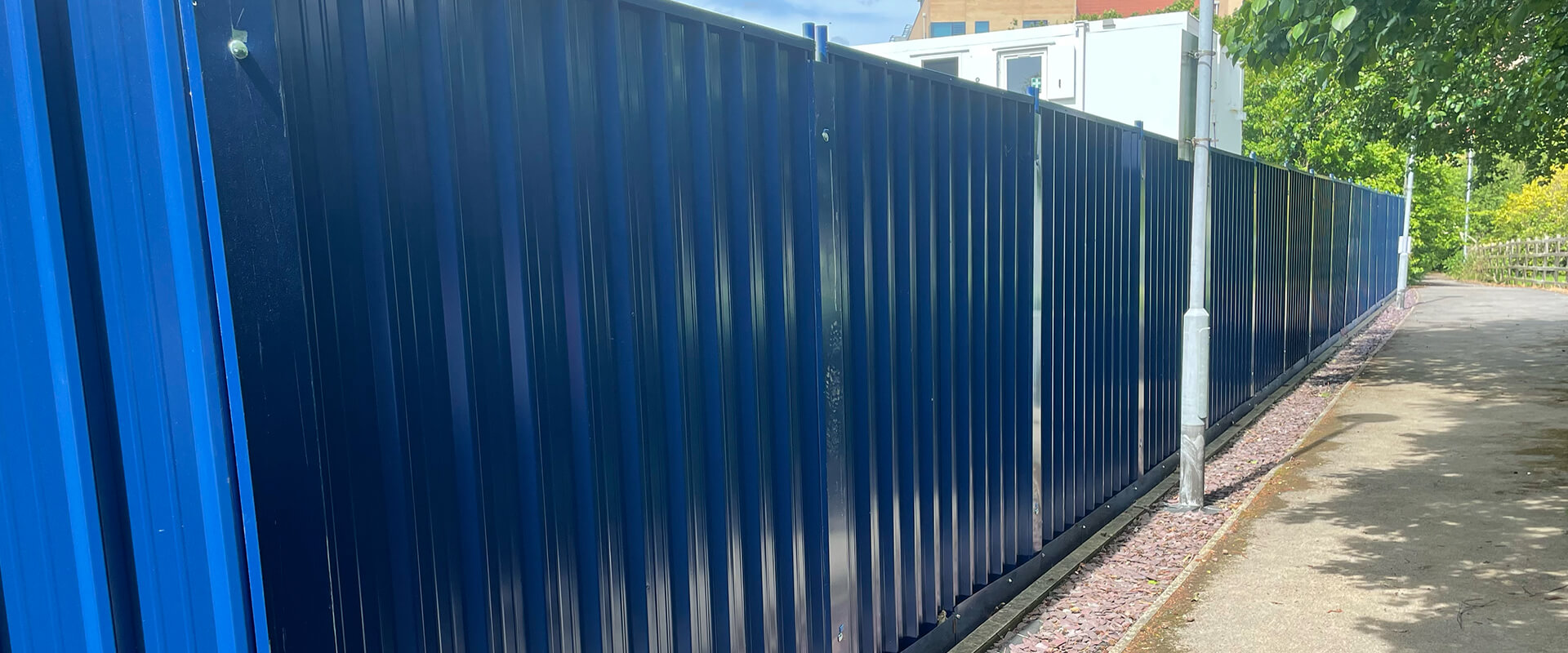
In the construction industry, steel hoarding has become a widespread feature, serving as a provisional barrier or perimeter on building sites. While these boundaries play a vital role in ensuring safety and security, it is crucial to address their environmental impact. In this article, we will delve into effective strategies for reusing and recycling steel hoarding, paving the way for a more environmentally responsible construction industry.
Streamlined Planning and Design
Efficient planning and design are pivotal in minimising the requirement for steel hoarding on construction sites. Through a meticulous assessment of project needs and integration of security measures into the overall building design, the need for additional hoarding can be reduced, resulting in both cost savings and enhanced sustainability.
Optimal Sizing and Placement
Strategic sizing and placement of steel hoarding panels can significantly curtail material usage. By positioning hoarding panels only where necessary and avoiding unnecessary overlaps, the efficiency of steel hoarding can be maximised, leading to reduced waste. At FREE STAND™, our hoarding systems consist of 2.1m wide metal hoarding panels that seamlessly overlap within the system framework, allowing for a continuous run of site hoarding without compromising aesthetics.
Reusing Steel Hoarding
Upon finishing a project or achieving key milestones, steel hoarding can be dismantled with care and relocated to other sites as required. At FREE STAND™, we promote the reutilisation of hoarding materials within the construction industry. Many of our clients have realised cost savings by permitting us to transport our hoarding to subsequent projects for them.
Recycling Steel Hoarding
Regardless of ownership or buy-back schemes, close collaboration with recycling facilities is essential to understanding their requirements for ensuring effective recycling practices. Steel hoarding materials can then be recycled and reintroduced into the manufacturing process, fostering a circular economy. This contributes significantly to a more sustainable industry.
Steel hoarding is essential for maintaining safety and security on construction sites, but it is also important to consider its environmental footprint. Construction companies can actively contribute to a more sustainable future by adopting practices that prioritise the reuse and recycling of steel hoarding systems.
Through efficient planning, reuse initiatives, and responsible recycling, construction industries can minimise their ecological footprint and conserve resources for a more sustainable future.
Are you a construction site or project manager in need of hoarding systems for a project you’re working on? When fitted by our expert team, we ensure compliance with all relevant legislation, so work can progress safely and efficiently.
For more information, give us a call on 0300 303 3034 or get a FREE no-obligation quote from us online today.
#sustainable #steelhoarding
Timber Hoarding. Steel Hoarding. Plastic Hoarding. Water-Filled Barriers. Anti-Climb. Gates.
FREE STAND™ is at the cutting edge of cost-effective hoarding systems and always evolving to give you the most versatile and hassle-free system specific to your needs, sign up to find out how we can save you money on your next project